2026 Arms Fair Dates and Locations
Gear Guides • 5 min read
Gear Guides
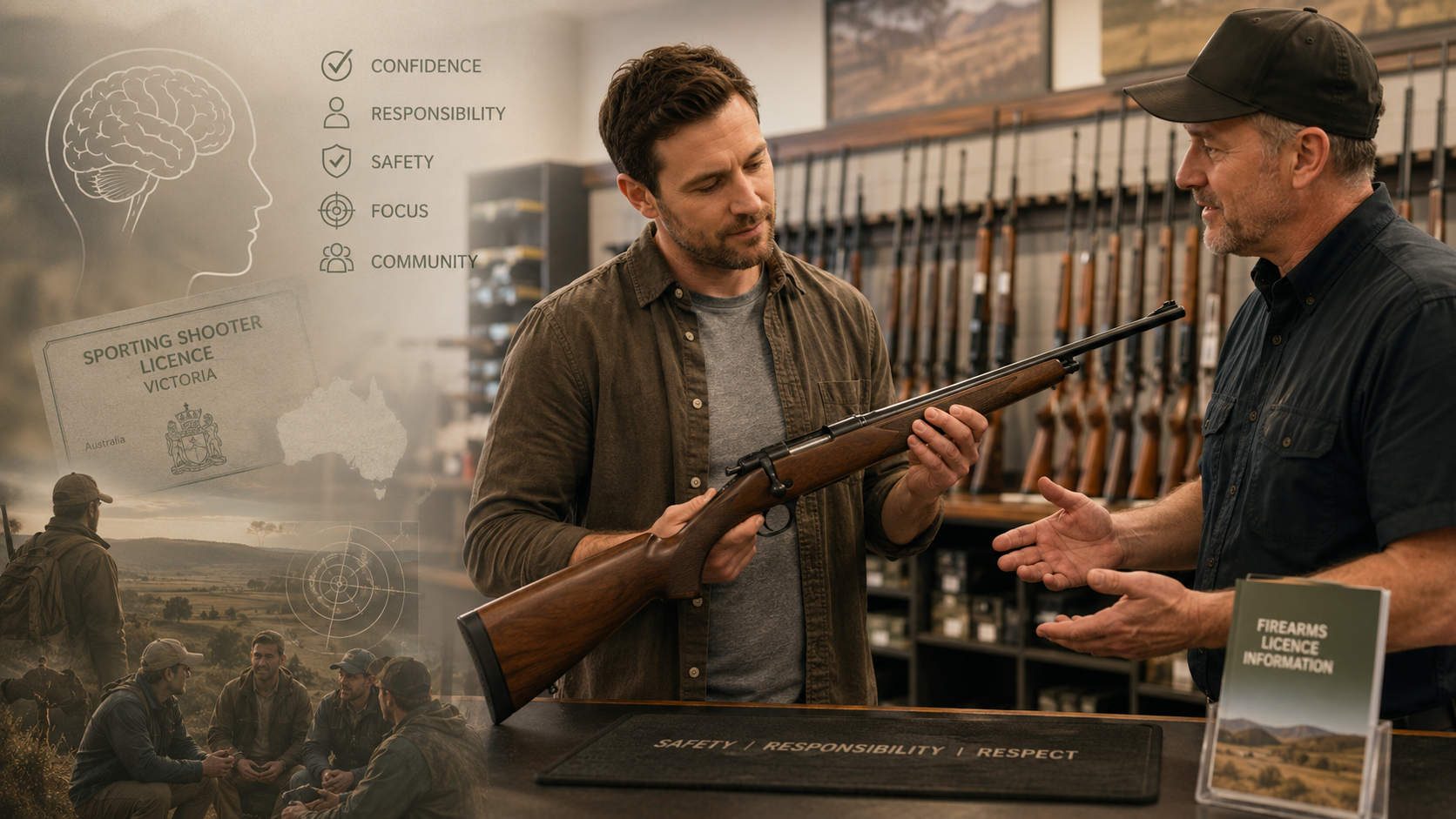
What really goes through someone's mind before they apply for their first firearms licence?
Buying a firearm in Australia is nothing like picking up a new hobby in most other countries. It's a deliberate, often months-long process, full of paperwork, waiting periods, background checks, and genuine soul-searching. For many first-timers, the decision doesn't happen overnight. It builds slowly, shaped by personal circumstances, community influences, and a quiet internal negotiation between curiosity, caution, and responsibility.
Understanding the psychology behind that journey matters, not just for the individuals going through it, but for the broader conversation around responsible firearms ownership in this country.
It Usually Starts with a "Why"
Ask any first-time gun buyer what prompted them to get licensed, and you'll rarely hear a simple answer. The motivations are layered, often overlapping, and deeply personal.
For many Australians, particularly those in rural and regional areas, firearms are a practical necessity. A grazier on a remote property in Queensland managing feral pigs isn't making an ideological statement; they're solving a real, immediate problem. The decision to get licensed feels less like a lifestyle choice and more like buying a good pair of work boots.
For others, especially those in suburban areas, the motivation is more subtle. Maybe a relative introduced them to target shooting. Maybe they tried clay pigeon shooting at a bucks party and discovered a genuine passion for the sport. Maybe they grew up around firearms and are finally in a position financially, geographically, or emotionally, to pursue that interest properly.
What's consistent across almost all first-time buyers is this: the "why" doesn't feel casual. It feels considered. And that's actually a healthy psychological starting point.
The Weight of Social Perception
One of the most underappreciated psychological pressures on first-time buyers in Australia is what we might call the "social mirror", the awareness of how others will perceive the decision.
Australia has a complex relationship with firearms. The 1996 Port Arthur massacre and the National Firearms Agreement that followed fundamentally reshaped public attitudes. Firearm ownership became, in many social circles, something people don't talk about openly, not because it's illegal, but because it carries an unspoken stigma in certain communities.
This creates an interesting psychological tension. A person who has a legitimate, lawful reason to own a firearm, whether for sport, collection, or primary production, may still feel reluctant to mention it at a dinner party. They self-censor not out of guilt, but out of anticipation of misunderstanding.
For first-timers, this social pressure can be a genuine barrier. The fear of being misread, of friends or family assuming the worst, sometimes delays or derails the process entirely. Overcoming that barrier often requires a kind of quiet confidence: a willingness to separate personal integrity from public perception.
Anxiety, Responsibility, and the "Am I Ready?" Question
Here's something the firearms community doesn't always talk about openly: many first-time buyers are nervous. Not in a reckless way, quite the opposite. They're nervous because they take the responsibility seriously.
This anxiety tends to cluster around a few core concerns:
Safe storage is a significant psychological preoccupation for first-timers. The idea of owning something that must be secured properly, and that carries real consequences if it isn't, weighs heavily. Many prospective buyers spend considerable time researching safes, storage solutions, and best practices before they even lodge their licence application.
This is, frankly, exactly the mindset you want in a new firearms owner. The anxiety isn't a warning sign; it's a signal of appropriate moral seriousness.
Imposter syndrome is real in the firearms community. New buyers worry about appearing ignorant in front of more experienced shooters, asking "dumb questions" at a gun shop, or mishandling a firearm in a way that embarrasses them. This can push some first-timers toward over-researching before taking any practical steps, reading forums, watching videos, and seeking out communities where they can learn without judgment.
Resources like the GunTraders Australia buyer guides and listings can be genuinely useful here, not as a place to immediately purchase, but as a way to familiarise oneself with the landscape: what types of firearms are available, what categories exist, and how the broader community talks about these things.
Licensing requirements in Australia vary by state and territory, and navigating them can feel overwhelming. The NSW Police Force Firearms Registry, and equivalent bodies in each state, provide authoritative guidance on licence categories, genuine reasons, and the application process. First-timers who anchor themselves to official government sources tend to feel more confident and less anxious about compliance.
Understanding that there is a genuine, well-regulated framework in place, and that it exists to make ownership safer for everyone, often provides significant psychological relief.
The Influence of Media (and Why It Mostly Misleads)
Australian first-time buyers are swimming in media portrayals of firearms that have almost nothing to do with their actual experience. Hollywood films, American news cycles, and social media algorithms tend to present firearms in extremes, either as tools of violence or as symbols of a particular political identity.
Neither framing reflects the reality of licensed firearms ownership in Australia.
The typical Australian firearms owner is a farmer, a hunter, a clay target shooter, or a collector. Their relationship with their firearms is defined by routine, discipline, and a quiet respect for what they own. It's less cinematic and more... methodical. And that's not a criticism; that methodical quality is exactly what responsible ownership looks like.
For first-timers trying to calibrate their expectations, the gap between media portrayal and lived reality can be jarring, but also, ultimately, reassuring. What they find when they engage with the actual community is often far more grounded and thoughtful than they anticipated.
Community, Mentorship, and the Role of Belonging
Humans are social creatures, and the decision to enter the firearms community rarely happens in isolation. Most first-time buyers can point to a person, a parent, a friend, a club member who served as a gateway. Someone who normalised the interest, answered early questions without judgment, and provided a sense of what responsible ownership actually looks like up close.
This mentorship dynamic is psychologically significant. It lowers the barrier to entry, reduces anxiety, and creates accountability. New shooters who have an experienced person guiding them tend to develop better habits faster, not because they're told to, but because they want to live up to the example being modelled.
Shooting clubs and sporting associations play a crucial role here. For first-timers, joining a club isn't just about access to a range; it's about belonging to a community with shared values around safety, discipline, and mutual respect.
Retailers and specialty suppliers also play a quieter but real role in shaping the first-time experience. Businesses like Golden Brothers Co, which supply firearm accessories and related products, are often part of the broader ecosystem that new owners engage with as they set up and learn, reinforcing community norms around quality and care.
What First-Timers Usually Discover
Once the licence is granted, the safe is bolted down, and the first range session is behind them, something interesting tends to happen: the anxiety largely fades.
What replaces it is a kind of quiet confidence. Not bravado, nothing like the media caricature. More like the satisfaction that comes from doing something properly. From having done the research, followed the process, and discovered that responsible firearms ownership is genuinely achievable.
Many first-time buyers describe a shift in how they think about the entire topic. What once felt mysterious, intimidating, or politically charged becomes, in practice, something much more ordinary and dignified. A skill. A discipline. A responsibility taken seriously.
That transformation, from anxious outsider to informed, responsible owner, is worth understanding and worth talking about. Because it's not a story about firearms specifically. It's a story about what happens when people engage seriously and honestly with something that matters.
Final Thoughts
The psychology of first-time gun buyers in Australia is richer and more nuanced than most outside the community realise. It involves genuine soul-searching, social courage, a deep respect for legal process, and, perhaps most importantly a willingness to embrace responsibility.
These aren't people acting impulsively. They're people who've thought carefully about a significant decision and chosen to engage with it honestly.
That's worth acknowledging. And worth understanding.